Solar generators are an increasingly popular choice for those seeking clean, renewable, and portable energy solutions. Unlike traditional fuel-based generators, they harness the power of the sun to provide electricity without noise, emissions, or ongoing fuel costs. Understanding how solar generators work can help you make an informed decision when choosing the right system for your needs.
The Three Main Components of a Solar Generator
A solar generator is made up of three essential components that work together to capture, store, and deliver energy efficiently:
1. Battery – Storing Energy for Later Use
The battery is the core of any solar generator, responsible for storing the energy collected from solar panels. Most modern solar generators use lithium-ion or LiFePO4 (lithium iron phosphate) batteries, which offer better efficiency, longevity, and weight advantages over traditional lead-acid batteries.
- Lithium-ion batteries: Lighter, longer lifespan (up to 2,000 charge cycles), and higher energy density.
- LiFePO4 batteries: More stable, safer, and capable of handling over 3,500 charge cycles.
- Lead-acid batteries: Affordable but bulkier and with a shorter lifespan (~500 cycles).
The battery’s capacity (measured in watt-hours, Wh) determines how much power the generator can store and how long it can run connected devices.
2. Inverter – Converting DC to Usable AC Power
Most electronic devices in homes and workplaces operate on AC (alternating current) power, while the energy stored in the battery is in DC (direct current) form. The inverter converts DC power into AC power, making it possible to run household appliances, power tools, and other electrical devices.
- Pure sine wave inverters are the best choice, as they provide a smooth and stable power output, ensuring compatibility with sensitive electronics like laptops, medical devices, and refrigerators.
- Modified sine wave inverters are less expensive but may not work efficiently with all appliances.
3. Solar Input – Harnessing Renewable Energy
The solar input allows you to connect the generator to solar panels, enabling energy collection from the sun. Most solar generators come with MPPT (Maximum Power Point Tracking) charge controllers, which optimize solar energy absorption and ensure faster, more efficient charging.
- Solar panel compatibility: Solar generators support various input wattages (e.g., 100W, 200W, or more).
- Charging time: The time it takes to fully charge a generator via solar panels depends on solar input wattage, battery capacity, and sunlight conditions.
- Input port types: Common connection types include Anderson Powerpole, XT60, DC barrel plug, and MC4 connectors.
Multiple Charging Options for Versatility
One of the biggest advantages of solar generators is their ability to charge via multiple sources, making them reliable in different situations:
✅ Solar Charging: The most sustainable option, ideal for off-grid use and emergency preparedness.
✅ Wall Outlet Charging: Allows fast recharging when grid power is available.
✅ Car Charging: Provides backup power on the go, useful for camping, road trips, or van life.
✅ Dual Charging (Solar + Wall): Some generators allow simultaneous charging from solar panels and AC outlets for faster recharge times.
How Solar Generators Work in Real Life
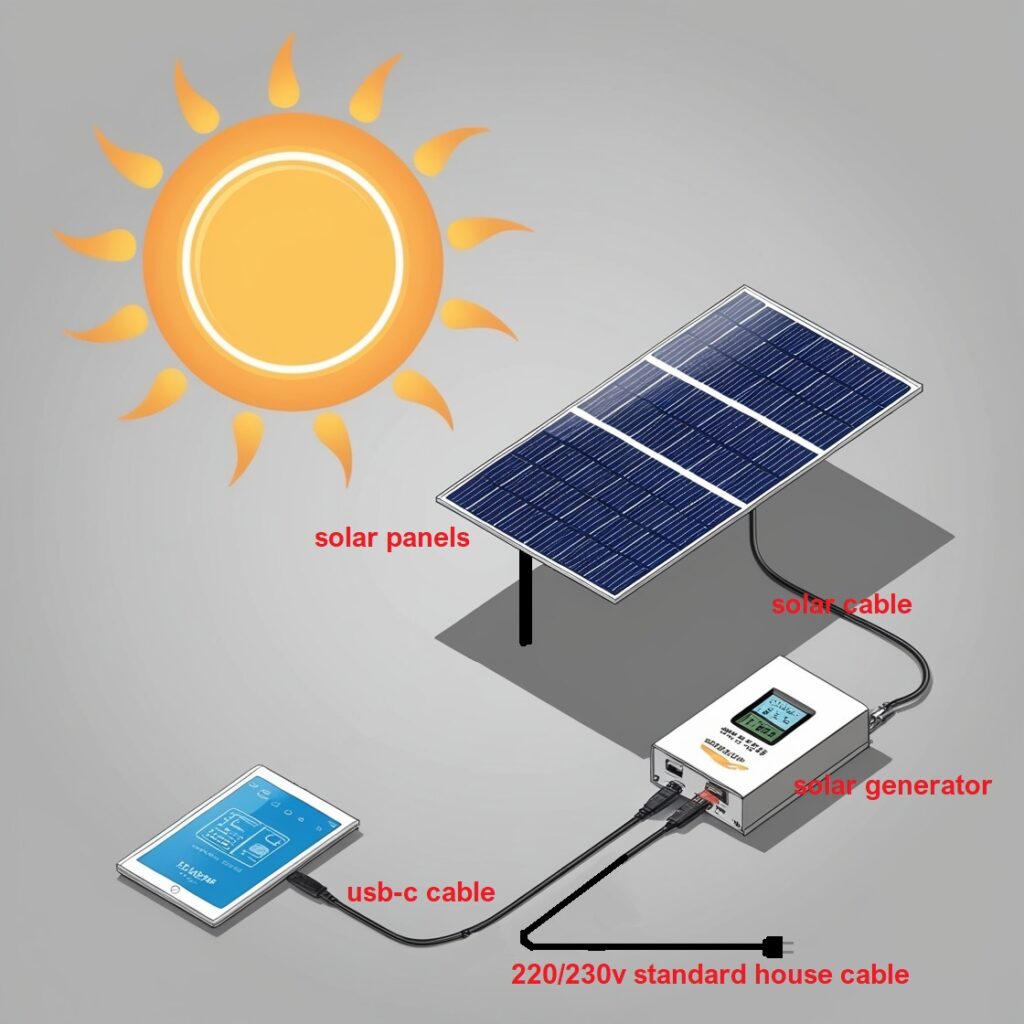
When sunlight hits the solar panels, the photovoltaic cells convert solar energy into electricity. This electricity flows into the battery and gets stored for later use. When you need to power a device, the inverter converts the stored DC power into AC power, allowing you to plug in and use your appliances as you would with a traditional power source.
Final Thoughts
Solar generators provide an eco-friendly, quiet, and fuel-free way to power your devices, whether at home, during camping trips, or in emergency situations. By understanding the battery storage, inverter functionality, and solar input, you can better assess which solar generator suits your power needs.
Are you looking for a solar generator that fits your lifestyle? Check out our reviews and find the best option for you!

Leave a Reply