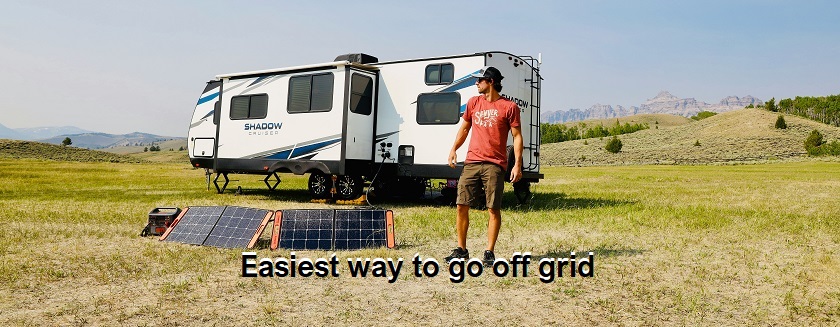
Going off-grid with a solar generator allows you to power your home, cabin, or RV without relying on traditional utilities. Whether you’re looking for energy independence, backup power, or sustainable living, this guide will walk you through everything you need to know about setting up and connecting solar panels to a solar generator for an efficient off-grid system.
Why Choose a Solar Generator for Off-Grid Living?
Solar generators provide a clean, quiet, and renewable alternative to gas-powered generators. Here’s why they’re a great choice for off-grid power:
✅ No Fuel Required – Solar energy is free and unlimited.
✅ Silent Operation – Unlike gas generators, solar generators run quietly.
✅ Low Maintenance – Fewer moving parts mean less wear and tear.
✅ Eco-Friendly – Reduces reliance on fossil fuels and lowers your carbon footprint.
Step 1: Choosing the Right Solar Generator
The right solar generator depends on your power needs and planned off-grid setup. Consider the following:
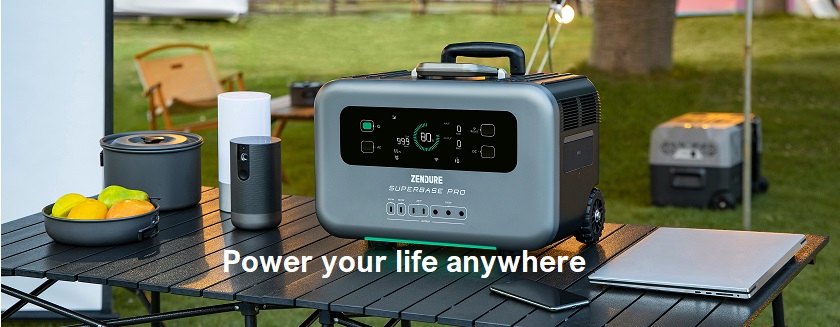
🔋 Battery Capacity (Wh) – Determines how much energy can be stored. Choose a generator with at least 3,000Wh+ for small-scale whole-home setups. Consider modular solar generators which support expandable energy storage and are ideal for whole-home setups. Your selection depends on your planned energy comsumption.
⚡ Inverter Power (W) – Ensure it can handle your appliances. 3,000W+ pure sine wave inverter is recommended for small-scale home use, the selection depends upon which of your appliances is most power-hungry. Select a power station which supports that appliance’s consumption and also take in account a margin of 10-20%.
🔌 Number of Output Ports – Look for AC outlets, DC ports, and USB slots to power multiple devices. Think about which devices and appliances and how many of them you are planning to connect.
Step 2: Sizing Your Solar Panel System
Solar panels recharge your generator, so choosing the right size is crucial. Consider:
☀️ Daily Energy Needs – Calculate your daily watt-hour (Wh) consumption.
🔆 Solar Panel Wattage – More watts = faster charging. A 1,000W solar panel array can recharge a large generator more efficiently.
📏 Panel Compatibility – Ensure the solar panels match your generator’s input voltage and connectors (XT60, MC4, Anderson, etc.).
🔹 Example Setup: A 3,000Wh solar generator + 1,000W solar panels can provide sustainable power for essential household appliances.
Step 3: Setting Up and Connecting Solar Panels
1️⃣ Position Your Solar Panels Correctly
- Place panels in direct sunlight, free from shade.
- Angle them for maximum sun exposure (adjust seasonally if needed):
- Winter: 45° tilt to capture lower-angled sunlight.
- Summer: 15-25° tilt to align with higher sun angles.
2️⃣ Connect the Panels to Your Solar Generator
- Identify the solar input port on your generator (e.g., XT60, MC4).
- Use the correct adapter cables to match your panel connectors.
- Choose between series or parallel connections based on your generator’s input requirements:
- Series Connection (Higher Voltage, Lower Current):
- Connect the positive terminal of one panel to the negative terminal of the next.
- Increases voltage while keeping amperage constant.
- Best for generators with higher voltage input ranges (e.g., 30-60V).
- Example: Connecting two 100W, 18V panels in series produces 36V, 5.5A. If your power station has a maximum input voltage of 20V, this setup won’t work, and you’ll need a parallel connection.
- Parallel Connection (Higher Current, Lower Voltage):
- Connect all positive terminals together and all negative terminals together.
- Increases amperage while keeping voltage constant.
- Best for generators with lower voltage but higher amperage input limits.
- Example: Connecting two 100W, 18V panels in parallel results in 18V, 11A. If your power station accepts up to 20V input, this setup works perfectly.
- Series Connection (Higher Voltage, Lower Current):
- Always check the solar generator’s max voltage and current limits before deciding which method to use.
3️⃣ Monitor Charging and Adjust as Needed
- Use the generator’s display or mobile app to check charge levels.
- Adjust panel angles or add more panels if charging is too slow.
Step 4: Managing and Optimizing Your Power Usage
To get the most out of your off-grid solar system, follow these tips:
⚡ Prioritize Essential Devices – Use power-efficient appliances to extend battery life.
🔋 Expand Battery Storage – Some solar generators allow extra battery packs for longer runtimes.
🌤️ Use Solar Power During the Day – Run appliances directly from solar input to preserve battery charge.
Final Thoughts
Living off-grid with a solar generator and solar panels is a sustainable and efficient way to achieve energy independence. By choosing the right solar generator, optimizing solar panel setup, and managing power consumption wisely, you can enjoy reliable power without the grid.
📌 Check out our buying guides
📌 Check out all our solar generator reviews
Leave a Reply