
What is a Solar Generator?
A solar generator is a portable power station that includes a solar charging option, allowing you to harness renewable energy from the sun.
It’s the easiest way to go off the electrical grid, providing eco-friendly power for camping, RV trips, home backup, and emergencies.
All you need is a solar generator, compatible solar cables, and solar panels to start generating clean energy anywhere.
1. What is a Solar Generator and what is a Power Station?
A power station is a portable energy storage device equipped with a rechargeable battery, multiple output ports (AC, USB, DC), and the ability to charge from various sources, such as wall outlets, car chargers, or solar panels.
A solar generator is essentially a power station with the added capability of charging via solar panels. Unlike traditional generators that rely on fuel, solar generators offer a quiet, eco-friendly, and renewable way to power your devices. They enable the simplest way to go off the electrical grid, making them ideal for camping, RV trips, home backup, and emergency preparedness.
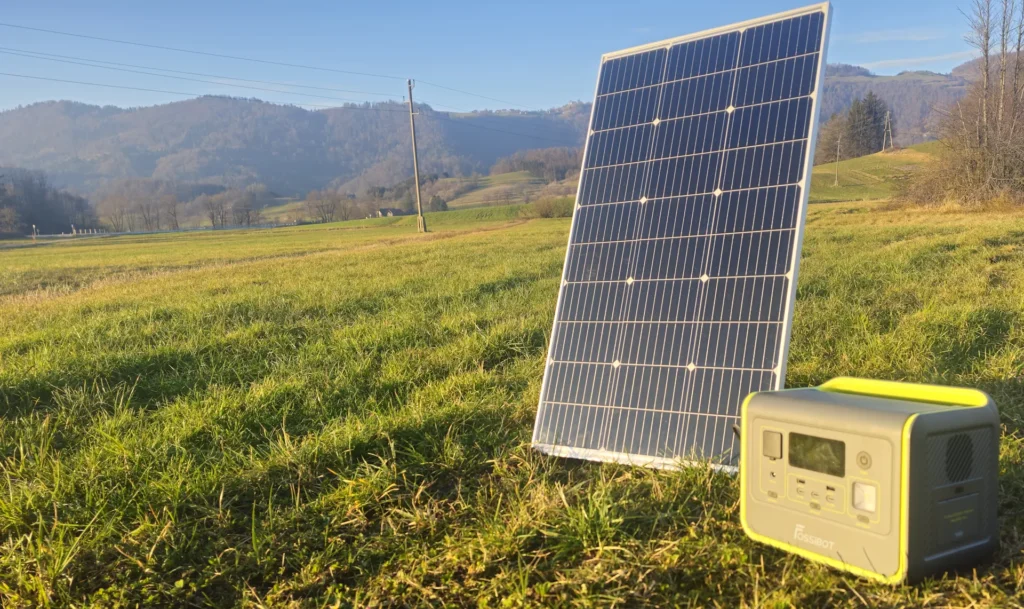
Picture: A solar generator harnessing free, clean energy from the sun through connected solar panels.
2. How Solar Generators Work
Solar generators consist of three main components:
- Battery: Stores energy for later use.
- Inverter: Converts stored DC power to usable AC power for household devices.
- Solar Input: Allows connection to solar panels for renewable energy charging.
These generators are versatile and can also charge via wall outlets or car chargers, giving you multiple ways to keep them powered.
3. Going Off-Grid with Ease with a Solar Generator
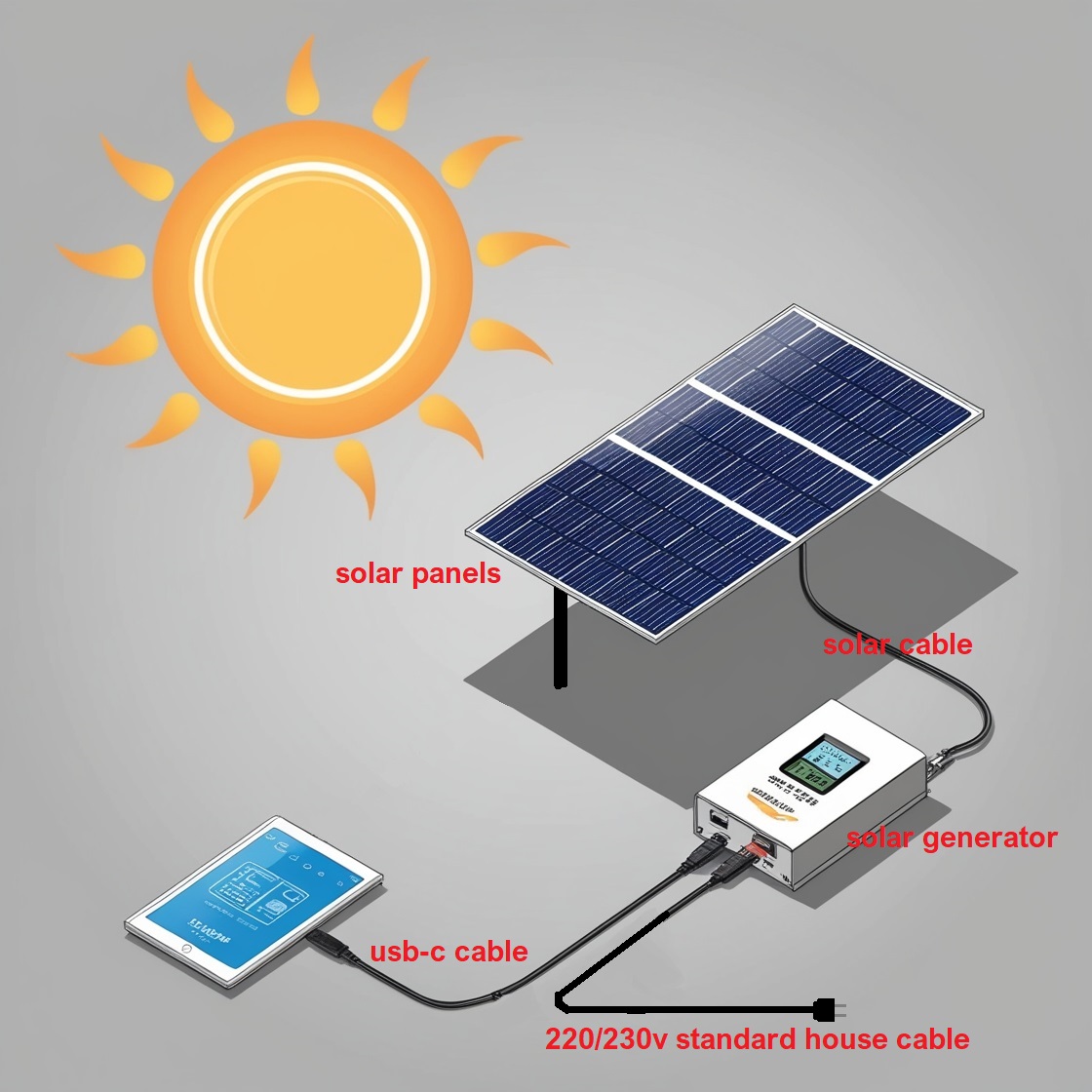
Going off the grid with a solar generator is simple and requires only three components:
- A solar generator.
- A compatible solar cable.
- Compatible solar panels.
Unlike traditional off-grid setups, no additional infrastructure is required. With a solar generator, you can start harnessing renewable energy quickly and efficiently.
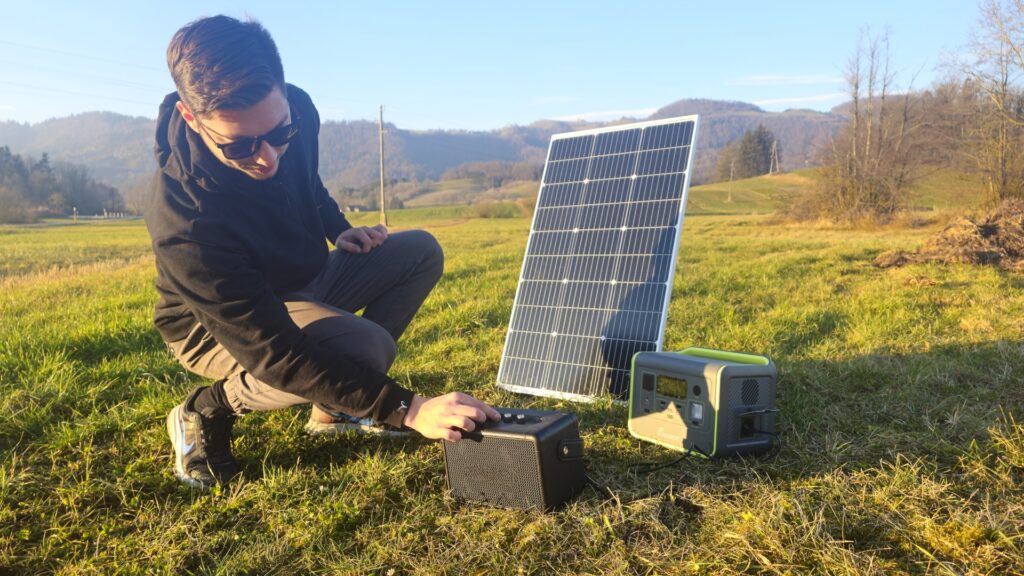
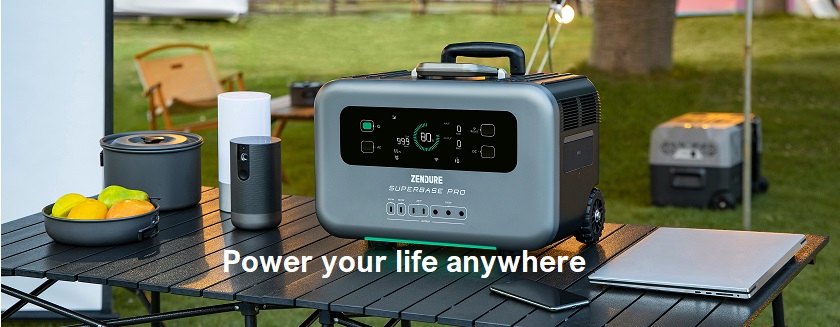
Picture: A Bluetooth speaker powered by a solar generator, which is recharging via solar panels using clean, renewable energy.
4. Solar Input Compatibility
To ensure smooth operation, it’s crucial to match the solar panels and cables with your solar generator in terms of:
- Wattage: Ensure the panel’s wattage does not exceed the generator’s maximum solar input (e.g., 200W max).
- Voltage: Ensure the panel operates within the generator’s voltage range (e.g., 12-30V).
- Amperage: Ensure the panel’s current does not exceed the generator’s maximum input (e.g., 10A max).
Common solar input connectors on solar generators include:
- XT60 connectors: Popular for modern solar generators.
- Anderson connectors: Used in high-wattage setups.
- DC5521 connectors: Barrel plugs for smaller units.
5. Types of Solar Cables
Here are common types of cables and connectors:
- MC4 connectors: Standard for most solar panels.
- XT60 cables: Common for newer solar generators.
- Adapter cables: Allow compatibility between different connectors (e.g., MC4 to XT60).
6. Battery Capacity and Runtime of Solar Generators
Battery capacity is measured in watt-hours (Wh) and determines how long a generator can power your devices.
- Example: A 1000Wh solar generator can power a 1000W device for 1 hour.
More examples:
- A 500Wh generator can power a 60W laptop for ~8 hours.
- A 200Wh generator can power a 10W LED light for ~20 hours.
7. Charging Times for Solar Generators
- Solar charging: For a 1000Wh solar generator, charging time depends on panel wattage and sunlight conditions. For example, with a 200W solar panel under optimal sunlight, it would take approximately 6-8 hours to fully charge.
- Wall charging: For a 1000Wh generator, charging time depends on the generator’s input power limit. For instance, with a 200W wall input, it would take approximately 5 hours to fully charge.
8. Real-Life Example: Going Off-Grid
Imagine a camper using a 500Wh solar generator with a 100W solar panel to power a mini fridge and charge their smartphone. On a sunny day, the solar panel replenishes the generator’s battery, allowing continued use throughout the day and night.
9. Why Get a Solar Generator?
Solar generators offer several key advantages:
- Eco-Friendly: Zero emissions and renewable energy use.
- Cost-Saving: Reduces dependence on grid electricity or fuel costs.
- Versatile: Ideal for camping, RVs, home backup, and emergencies.
With a solar generator, you can enjoy reliable, portable, and clean energy whenever and wherever you need it.