Solar generators are an efficient, eco-friendly, and portable way to generate power using the sun’s energy. Whether you need backup power for your home, a reliable power source for outdoor adventures, or a full off-grid solution, selecting the right solar generator can be overwhelming. This guide will walk you through the key factors to consider when choosing a solar generator to meet your needs.
What is a Solar Generator?
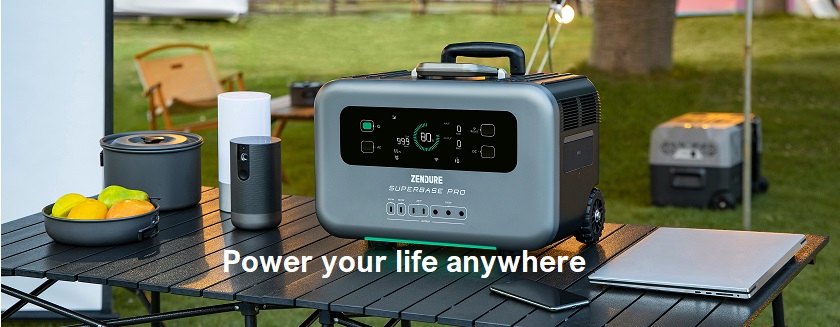
A solar generator is a portable power station that stores energy collected from solar panels in a built-in battery. It converts that stored energy into usable electricity, powering devices and appliances through AC outlets, USB ports, and DC outputs. Unlike gas generators, solar generators are silent, emission-free, and require no fuel—making them a clean and cost-effective power solution.
Key Features to Consider
Before purchasing a solar generator, it’s important to understand the core components that determine its performance:
1. Battery Capacity (Wh) 🔋
The battery capacity is measured in watt-hours (Wh) and determines how much power a generator can store and supply.
- Small Capacity (200-500Wh): Ideal for charging phones, cameras, and small devices.
- Medium Capacity (500-1,500Wh): Suitable for running small appliances, laptops, and CPAP machines.
- Large Capacity (1,500Wh+): Best for home backup, RVs, and powering multiple appliances.
What Does Battery Capacity (Wh) Actually Mean? 📊
Battery capacity is measured in watt-hours (Wh) and determines how long a solar generator can power your devices before needing a recharge.
🔹 Quick Example:
A 1,000Wh solar generator can power a 1,000W appliance for 1 hour (or a 500W appliance for 2 hours).
🔹 More Examples:
A 200Wh generator can power a 10W LED light for ~20 hours.
A 500Wh generator can power a 60W laptop for ~8 hours.
2. Power Output (W) ⚡
Measured in watts (W), the power output determines what devices the generator can handle.
- Continuous Power: The amount of power it can supply consistently.
- Surge Power: The peak power it can handle for short bursts (e.g., when starting a fridge or power tool).
3. Solar Charging Input ☀️
Solar generators are charged using solar panels. Look for:
- Input Wattage: Higher input wattage = faster charging.
- Voltage & Amperage Range: Compatibility with various solar panels.
- Connector Type: Common types include XT60, Anderson, and MC4.
4. Output Ports 🔌
Ensure the generator has the right ports for your needs:
- AC Outlets: For standard household appliances.
- USB-A & USB-C: For phones, tablets, and laptops.
- DC Ports & Car Outlets: For camping gear and car-powered devices.
5. Portability & Weight 🎒
Consider how often you’ll be moving your generator:
- Lightweight (2-7 kg / 5-15 lbs): Easy to carry for camping and outdoor use.
- Mid-weight (7-18 kg / 15-40 lbs): Balanced for RVs and moderate portability.
- Heavy (18+ kg / 40+ lbs): Best for stationary home backup power.r.
Choosing the Right Solar Generator for Your Needs
Different use cases require different specifications. Here’s what to focus on:
🏕️ Camping & Outdoor Adventures
Key Features to Look For:
- Lightweight & portable (up to 9kg/20 lbs)
- at least 500-1,000Wh battery capacity
- Fast-charging solar input (at least 100-300W)
- Multiple USB & DC outputs for gadgets
Why? A small and portable solar generator can keep your essential devices charged—phones, lights, and small camping gear—without adding too much weight to your pack.
🚐 RVs & Van Life
Key Features to Look For:
- at least 1,000-2,000Wh battery capacity
- High-wattage AC outlets for appliances
- Fast solar input (at least 300W+ solar charging capacity)
- 12V DC car charger compatibility
Why? RVers need a balance between portability and power output. A medium-to-large solar generator can run a mini-fridge, lights, fans, and cooking devices, ensuring a comfortable off-grid experience.
🏡 Home Backup Power
Key Features to Look For:
- at least 2,000Wh+ battery capacity (depends on total planned consumption during power outages)
- Multiple AC outlets for household appliances
- UPS (Uninterruptible Power Supply) functionality
- Expandable battery options
Why? For home backup, a solar generator should be able to power essential devices like refrigerators, Wi-Fi routers, and medical equipment during outages. A UPS feature ensures an automatic switch to battery power when the grid fails.
🌞 Off-Grid Whole House Power
Key Features to Look For:
- High-capacity (at least 3,000Wh+) and expandable batteries (modular solar generators allow for expandable batteries)
- Pure sine wave inverter (at least 3,000W+ continuous AC output, depends on total planned consumption)
- Fast solar input (at least 500W+ solar capacity)
- Multiple AC and DC outputs
Why? For fully off-grid living, you’ll need a high-capacity system with efficient solar recharging. The ability to expand battery capacity and integrate multiple solar panels is crucial for powering a full home setup.
Final Tips for Buying a Solar Generator
✔️ Calculate your power needs: Make a list of devices you plan to use and check their wattage.
✔️ Look for fast solar charging: A higher solar input reduces downtime.
✔️ Check for expandability: Some models allow extra battery packs for longer runtime (modular solar generators)
✔️ Consider ease of use: A generator with an app or LCD display makes monitoring power levels easier.
🔗 Next Steps
Ready to find the best solar generator for your needs? Check out our buying guides for expert recommendations and detailed comparisons.
📌 Check out our buying guides
📌 Check out all our solar generator reviews
Leave a Reply